War Has Evolved Zelensky — Now He Must Transform Once More

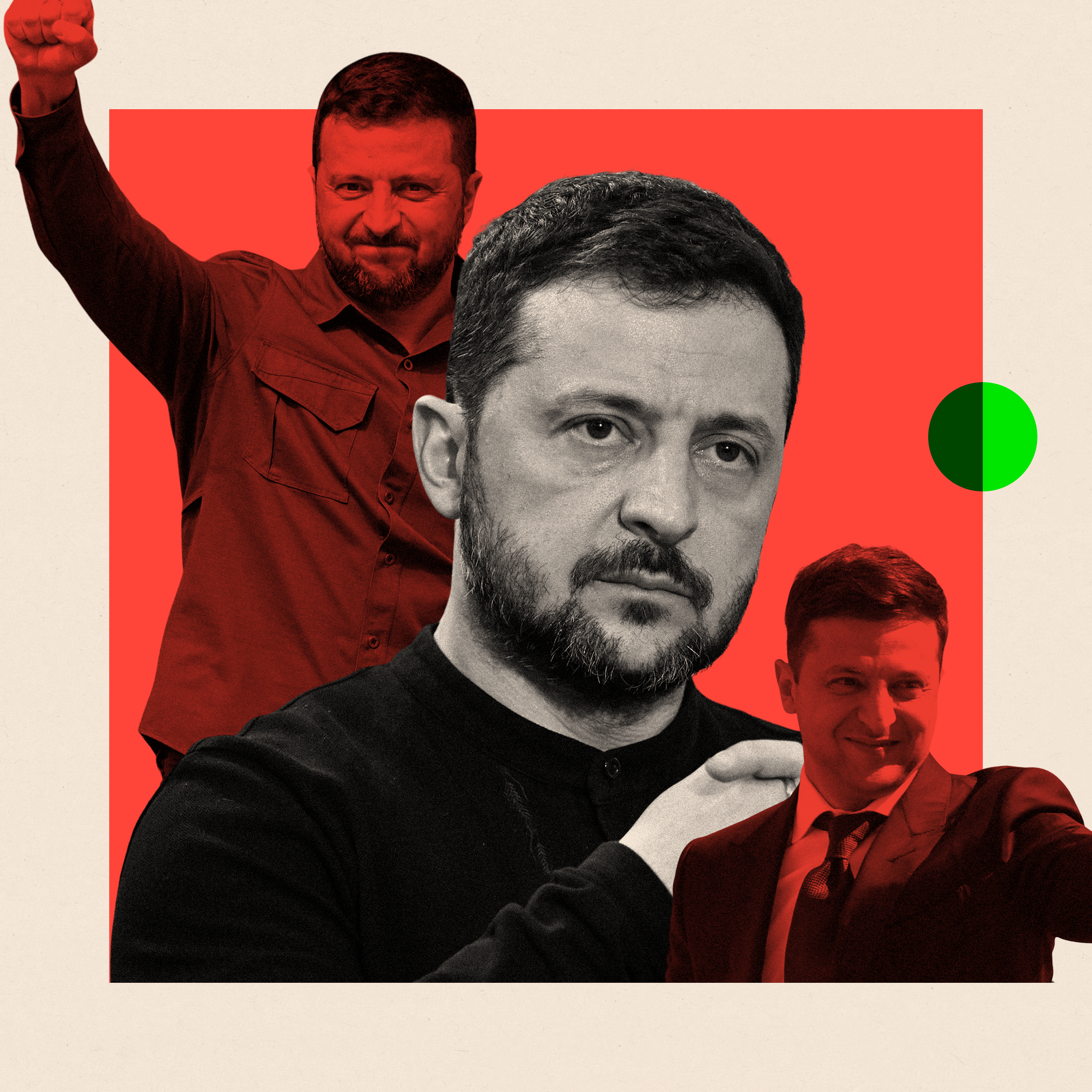
"This was how Donald Trump referred to Volodymyr Zelensky as the top salesperson ever," due to the substantial assistance the U.S. provided to Ukraine.
Regardless of whether it is a fair comparison, Zelensky's part in maintaining focus on his nation and persuading allies to provide support has undoubtedly played a vital role in Ukraine's struggle.
His shift from a primetime entertainer to a wartime leader began in 2022 when he chose to stay in Kyiv even as Russian forces advanced. This choice led to Ukraine continuing its defense up until now.
Since then, we have met face-to-face numerous occasions, and Zelensky now appears as an even more commanding presence, possibly shaped by the trials of conflict and enhanced solitude on the global scene.
However, given the uncertainty surrounding Trump's potential actions during his hypothetical second term—especially after their heated confrontation in the Oval Office in February—Zelensky might now be forced to adapt once more.

Politically, it is no longer simply a tale of oppressors against the oppressed. Instead, it is complicated by the twin challenges of advocating for peace while safeguarding national interests.
However, is someone accustomed to wielding significant power domestically and exerting considerable influence internationally truly prepared to undergo another major shift, pivoting towards the diplomatic approach characteristic of the Trump era? Alternatively, might he conclude that the most effective strategy to defend Ukraine is by making minimal concessions?
'Very clever and calculated'
Prior to the start of Chapter Two under Trump, Ukraine’s leadership had actively sought Western backing. They urgently called for anti-aircraft systems, armored vehicles, rocket launchers, and combat aircraft. While countries like Germany were initially hesitant due to concerns about the conflict intensifying, they eventually conceded to these demands.
His stance was strict, yet he managed to garner backing.
As per Ed Arnold from the defense and security think tank Rusi, Zelensky displayed remarkable shrewdness and strategic thinking during the initial phase of the conflict.
Mr. Arnold contends that his choice to attend the Munich Security Conference two weeks prior to the invasion, even though he was warned about the potential security risks, played a crucial role.
Personalized support for Ukraine was planted in the minds of those who personally attended.

Serhiy Leshchenko, who advises Zelensky's office, states: "It’s crucial for us to stay in the global spotlight. Should public sentiment support Ukraine, we stand a greater opportunity of receiving assistance from the worldwide community."
Leshchenko highlights Zelensky's frequent video messages issued since the beginning of the invasion. "It's uncommon for a leader to be this transparent."
The triumph in the Battle of Kyiv solidified Zelensky’s status as an emblem of Ukraine's resilience and strengthened his argument for ongoing military support from Western nations.
In late 2022, Zelensky showcased the impact of their supplies as significant portions of Ukrainian land, such as the city of Kherson, regained freedom. Initially, he achieved positive outcomes with European partners.
Mr. Arnold states that they have vested interests in both President Zelensky personally and in Ukraine as a nation. 'Since the beginning of the war,' he explains, 'Zelensky has worked with four different British prime ministers, each of whom has endorsed new agreements with Ukraine, once more via Zelensky.'
He has managed to navigate through the shifts in European national politics during his time in office.
However, when additional achievements did not come through, Zelensky's address remained consistent—and over time, this approach proved detrimental to him.
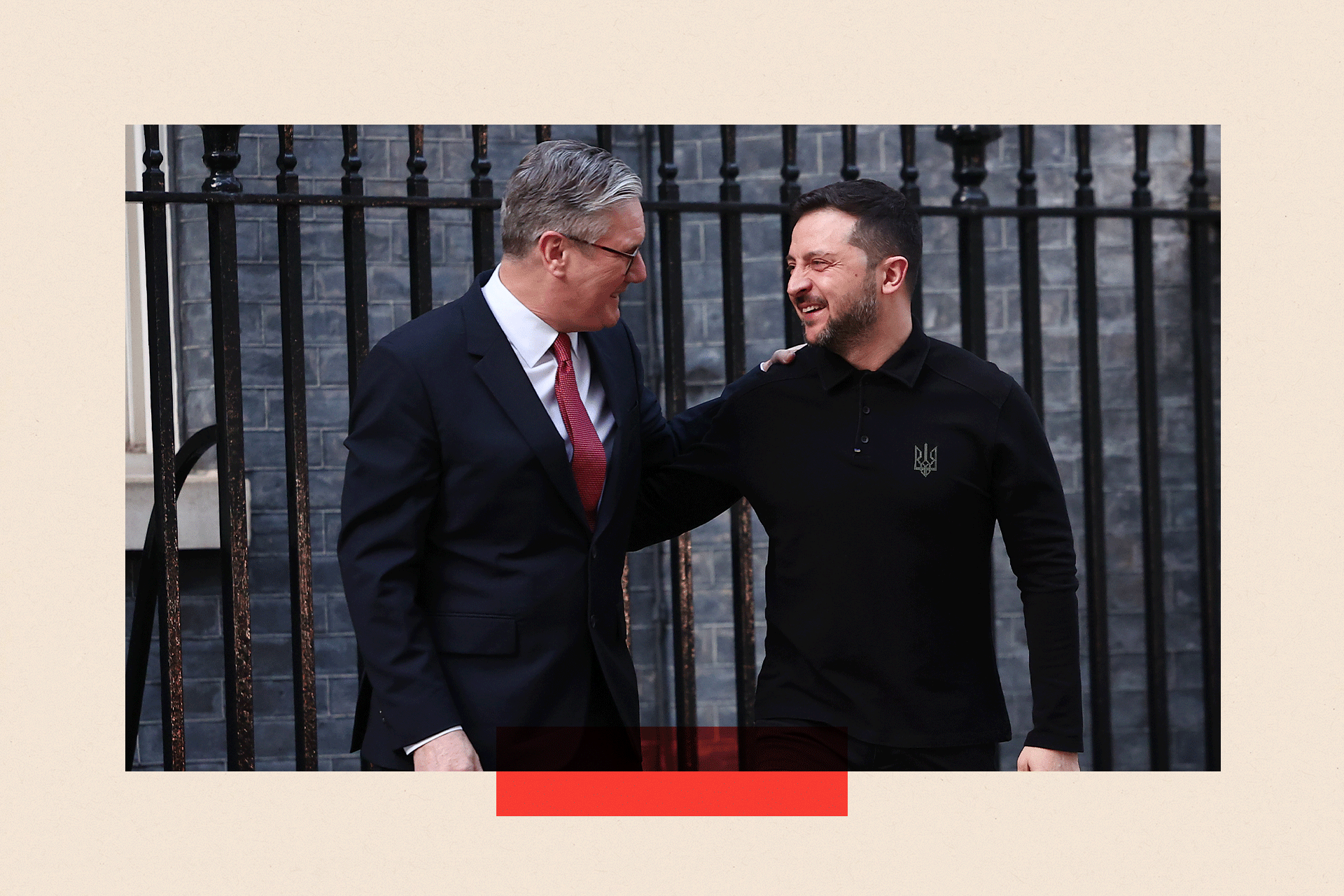
Following Ukraine's unsuccessful counter-offensive during the summer of 2023, a significant faction within US Republican circles began questioning the wisdom of backing Kyiv. As a result, calls to reconsider support started gaining traction in certain political spheres.
Maria Zolkina, who leads the regional security and conflict studies program at the Kyiv-based think tank Democratic Initiatives Foundation, holds President Zelensky partially accountable for this situation.
He and his inner circle believed in the strategy that they needed to constantly be assertive when communicating with their partners, advocating for the stance that Ukraine requires certain concessions. This approach proved effective throughout 2022; however, beginning in 2023, such rhetoric ceased to yield positive outcomes with the U.S. and other entities, as noted by her.
However, his diplomatic approach failed to adapt rapidly enough.
'Zelensky has always lacked diplomatic experience.'
On September 27, 2024, in a New York lobby, Ukraine’s fortunes shifted dramatically. The catalyst wasn’t an advance against Russian forces, but rather the resurgence of its primary supporter—the United States.
That day, slightly more than a month prior to the US presidential election, Zelensky met unexpectedly with Trump at Trump Tower.
The tensions between them had escalated prior to this meeting: Zelensky had stated a few days earlier that Trump was not "truly aware of how to bring an end to the war," following Trump’s claim that he could resolve it within “a single day.”
Following the meeting at Trump Tower, both individuals appeared uncomfortable when they came out.
Even though they declared a shared perspective on ending the conflict, their nonverbal cues indicated a distinct absence of rapport.
They wouldn't cross paths once more until five months later in the Oval Office, with this well-known meeting turning into a significant blunder for Kyiv diplomatically.
Vadym Prystaiko, who witnessed their initial meeting following Zelensky's electoral victory in 2019, comments, “Trump ought to have approved of him.” He elaborates, stating, “To Zelensky, Trump appeared somewhat like himself—a figure from the media realm transitioning into political life, someone opposing the establishment."
Mr. Prystaiko served as Ukraine’s ambassador to the United Kingdom until he was dismissed in 2023. The government in Kyiv did not provide an official explanation for this removal; however, it followed comments from Mr. Prystaiko criticizing President Zelensky's reaction to remarks about expressing thanks for British military support. According to him, the president displayed “a little bit of sarcasm” in his reply, which he considered unhealthy.
Mr Prystaiko further states, “Zelensky has not served as a diplomat before.” He continues, emphasizing, “Moreover, he hasn’t acted like your typical political figure who is known for holding infants and exchanging handshakes.”
A 'rollercoaster' relationship
Trump’s relationship is akin to a roller coaster ride," according to Volodymyr Fesenko, director of the Pento Center for Political Studies. "It experiences moments of productive collaboration followed by abrupt crises out of nowhere.
Furthermore, their verbal conflict continues. Trump accuses Zelensky of initiating the war and labels him as a "dictator," whereas Ukraine’s president charges his American counterpart with residing within a realm of Russian misinformation.
Mr. Fesenko thinks that President Zelensky keeps adjusting his strategies to establish an effective partnership with Washington, whereas Ms. Zolkina feels that the problems run much deeper.
She argues that there is a triangular relationship involving the U.S. administration, the Kremlin, and Kyiv. Ukraine is seen as the less powerful entity within this triad. To Trump, Zelensky does not measure up, which poses an issue.
During the well-known encounter in the Oval Office involving Trump and his Vice President, Mike Pence, Zelensky appeared to be at a loss politically for the first time. He faced accusations of not demonstrating sufficient appreciation and potentially risking a conflict akin to World War III.
His newly adopted defensive posture, such as crossing his arms, appeared different.
Zelensky has consistently seemed relaxed when hosting or meeting with other leaders. He handles himself confidently on a platform and frequently adds relevant humor – however, this situation stood out as distinct.
A mining deal proposed by Zelensky initially involved offering part of Ukraine’s mineral resources as an exchange for ongoing military assistance. However, this agreement remained unsigned and later transformed into a proposition that would be less advantageous for Kyiv.
The United States would temporarily halt its military assistance and intelligence sharing to make sure Ukraine followed its lead.

However, according to certain officials, the Oval Office meeting did not turn into a disaster.
"Igor Bruzylo, the vice president of the Presidential Office, who accompanied Zelensky to the White House, asserts that nobody viewed it as the conclusion of an era,” he says. “Our focus was on discussing ways to progress. We did not perceive this as a catastrophe.”
When U.S. National Security Advisor Mike Waltz informed them that the meeting had concluded, "we simply shrugged our shoulders and opted to return to the hotel," he remembers.
I assume that personally, they [Trump and Zelensky] have a good rapport," he says. "They seem to understand each other more clearly and communicate openly and honestly.
Regardless of what really happened between them in private, indications suggest that Zelensky has shown some flexibility since their encounter — reportedly, European partners managed to persuade him to adopt a more cooperative stance afterward. This shift was due to the undeniable reality that both he and Ukraine continue to rely on U.S. support to counter an assertive Russia.
Others contend that even further flexibility is required.
'It is extremely hard to sway Zelensky'
"The conflict alters everybody; it has impacted each one of us in various ways. However, I do not believe that fundamentally President Zelensky has been transformed—whether this change would be positive or negative in certain scenarios,” explains Olga Onuch, who specializes as a Professor of Comparative and Ukrainian Politics at the University of Manchester.
Clearly, some parties find it challenging to negotiate with Zelensky for one simple reason: he maintains his red lines without wavering.
Mr. Brusylo concurs. He states, "It is extremely challenging to make Zelensky yield." "It’s akin to observing a spring; the harder you press, the stronger the resistance becomes."
Whenever Ukraine faces attacks, whether political or diplomatic, it leads to greater political cohesion. This pattern held true even during the confrontation at the Oval Office, with Zelensky’s approval ratings climbing to approximately 70%.
According to Ms. Zolkina, "Zelensky holds significant power, and his influence stems from both himself and a particular group of individuals."
Orysia Lutsevyich, who leads the Ukraine Forum at Chatham House, finds it noteworthy how Ukrainians united behind Zelensky following the events in the Oval Office, as though they viewed it as a direct affront to their nation's sovereignty.
Individuals unite behind him, embracing his values and conduct.
Mr. Prystaiko contends that if the Americans desired his replacement, they would have effectively shot themselves in the foot since he could likely get re-elected with ease.
Several political analysts, including Ms Zolkina, disagree with this assumption. She remarks, "I doubt he comprehends that this surge is primarily a result of how Trump is acting, rather than reflecting his individual standing."
He harbors quite powerful political aspirations for a second term and tends to be politically self-centered, which is common among leaders of his stature.
Professor Onuch doesn't believe that the quest for political power solely drives Zelensky. "He is [much more of an] attentive and deliberate and strategic political player than many acknowledge."
Nevertheless, envisioning Zelensky serving another term remains challenging due to the immense pressures of the role. Even the difficulties following the war would be significant.
At present, Mr. Arnold believes that an exhausted Zelensky might prefer not to run for office again and proposes that he could be seeking a means to step back from active political engagement, particularly from issues related to the frontlines of conflict.
In the short term, Zelensky can’t risk visiting the Oval Office again. Considering Trump’s active interest, does this mean we’ll see Ukraine's president playing a round of golf with him sometime soon?
"“He picks up things quickly,” remarks Mr. Brusylo. “I’m certain he’ll handle playing golf when the time comes.””
Top image credit: Getty Images
Additional reporting by Hanna Chornous and Vicky Riddell
Depth The homepage on both the site and app offers top-notch analyses, providing new viewpoints that question established beliefs and thorough coverage of today’s most significant topics. We also feature stimulating material sourced from Sounds and iPlayer. To share your thoughts on our InDepth segment, simply click the button provided below.
More from InDepth
- Trump has turned his back on the foundation of US economic might - the fallout will be messy
- Trump has blown up the world order - and left Europe's leaders scrabbling
- What will Russia do next? The nations attempting to safeguard against Putin's influence