Stunning 3D Scan Reveals Inner Workings of a Mouse Brain

A pioneering research has produced the most intricate map of a mammalian brain ever documented.
The 3D diagrams showcase over two miles of neural connections, nearly 100,000 neurons, and approximately 500 million synaptic junctions—all within a fragment of a mouse brain not larger than a speck of sand.
Dr. Clay Reid from the Allen Institute for Brain Science in Seattle stated, "Within this minuscule particle lies an intricate network of connections, governed by principles we are just starting to comprehend."
The specimen originates from an external section of the brain called the cortex, an area associated with vision. Times reports.
Dr. Forrest Collman from the same institute stated, "Through examining the functionality of the cortex in mouse brains, we can develop improved theories and hypotheses regarding the workings of our human brains."
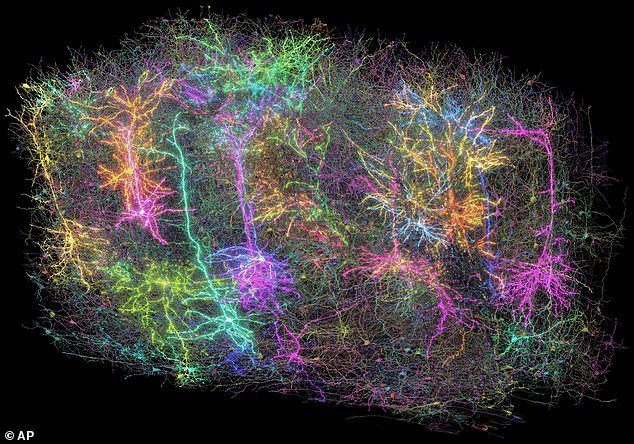
His group thinks that having the ability to chart and examine the brain's inner connections at this scale could pave new avenues for understanding and treating neurological disorders like Alzheimer's disease, Parkinson's and autism.
He referred to it as the 'Google Maps for the brain,' which goes beyond showing main highways to depict each tiny street, individual houses, and even the rooms within those houses.
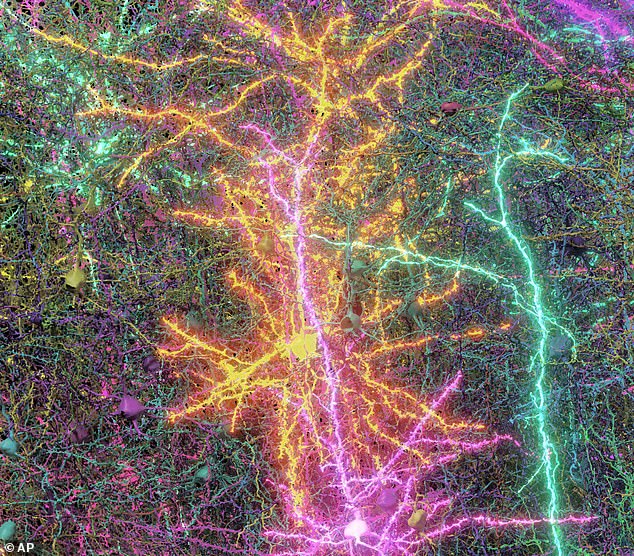
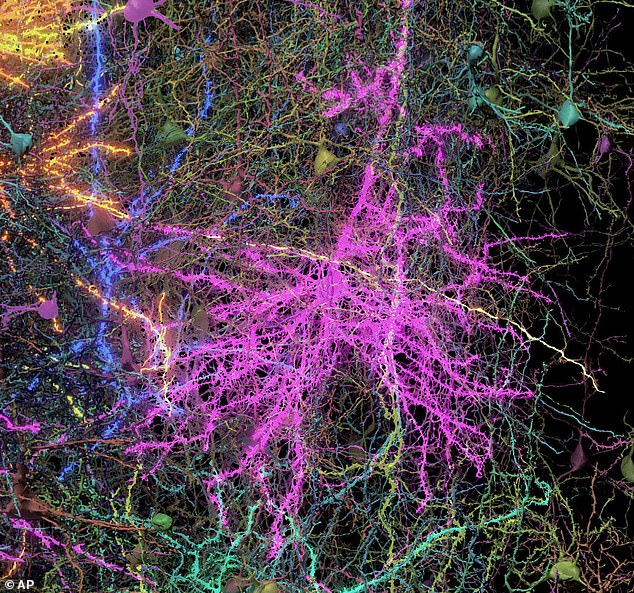
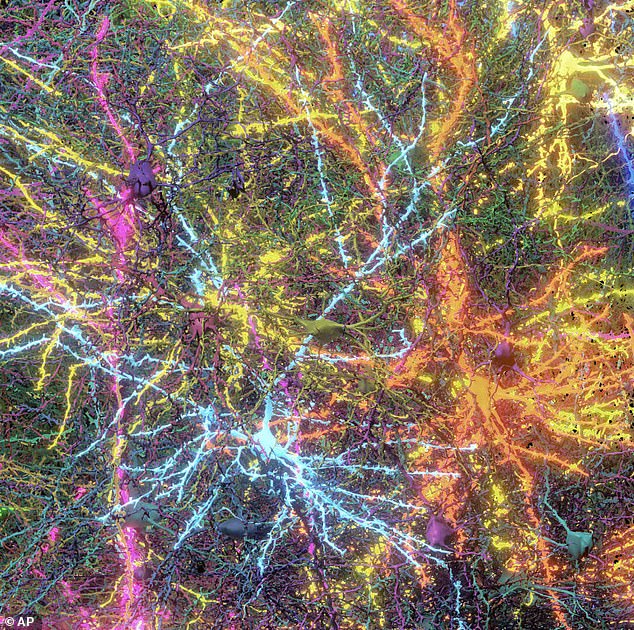
Similar to how people utilize Google Maps to determine the optimal path from location A to location B, or simply to verify if such a route is possible, this comprehensive neural map enables researchers to identify whether two neurons are interconnected and precisely pinpoint where these connections take place.
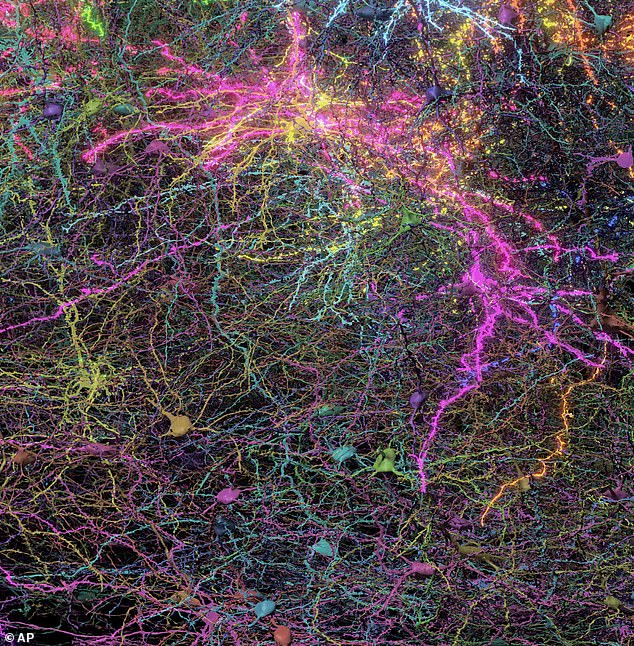
What made this research particularly intriguing was that the mice needed their brain activity documented as they viewed YouTube videos, enabling researchers to observe the interactions between various cell networks.
Following this, they divided the tissue into 25,000 slices, with each slice being merely 1/400th the thickness of a typical human hair, before examining them through powerful electron microscopes.
The images were combined, and an AI-generated 3D model was produced. The final result not only depicts the structure but also illustrates which brain cells interact and the manner of their communication.
Nuno Macarico da Costa from the Allen Institute stated that one of the outcomes of their project reveals "the astounding beauty of the brain."
Simply observing these neurons allows one to grasp their complexity and size, instilling an overwhelming sense of wonder towards the brain.
Read more