Unlimited Clean Energy From Earth’s Rotation?

- READ MORE: Wind surpasses natural gas as the largest supplier of electricity in Britain
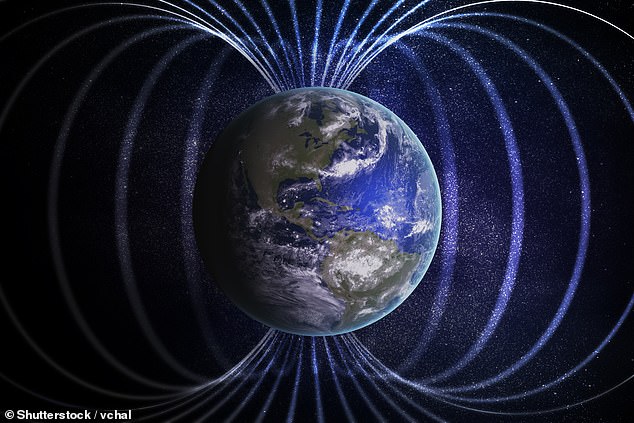
As we proceed with our daily activities – such as working, eating, and sleeping – the Earth continuously rotates within its magnetic field.
Currently, specialists assert that it is feasible to extract clean energy from this inherent oscillation.
Researchers have utilized the Earth's rotation to produce a small quantity of electrical power.
Even though the voltage they generated was minimal, this could represent the initial stage toward a novel method for producing endless clean power, they stated.
The concept traces back centuries to when scientists initially proposed that the disparity in velocity—the speed of an object in a specific direction—between a magnetic field and its magnet might enable a voltage to develop.
Earlier research seems to have refuted this idea, suggesting that electrons influenced by the Earth's magnetic field would swiftly realign themselves, thereby nullifying any disparity in electrical charge.
Nevertheless, a recent experiment indicates something different.
Scientists utilized a 29.9 cm long hollow cylinder constructed from manganese-zinc ferrite – a substance selected to facilitate the movement of magnetic fields.
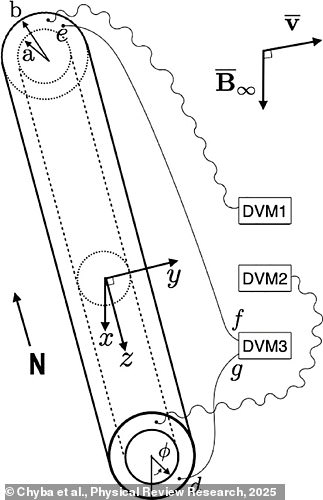
The cylinder was positioned inside a completely dark, windowless laboratory to eliminate any potential disturbances caused by light. It was also tilted such that it formed a 90-degree angle relative to Earth's rotational axis and magnetic field.
Even though the object remained still within the laboratory, the lab was moving due to Earth's rotation as it passed through its inherent magnetic field.
This generated a magnetic force affecting the electrons within the object—and upon examination, it showed that a voltage of 19 microvolts had been measured.
The researchers from Princeton University and NASA's Jet Propulsion Laboratory stated that this voltage vanished when the cylinder was positioned differently or another type of cylinder was utilized, indicating that it might have been produced due to the Earth’s rotation.
They referred to the findings as 'preliminary proof-of-concept results' and cautioned against premature celebration.
They mentioned that their findings serve as a foundation for upcoming research aimed at exploring methods to effortlessly produce higher levels of current and voltage utilizing the Earth's magnetic field.
In the journal Physical Review Research, the researchers stated: "Is it possible for electricity to be produced by Earth's spin within its magnetic field?"
By accounting for thermoelectric and other possible interfering factors, our study demonstrates that this miniature prototype produces a steady DC voltage and current matching the expected levels.

In recent times, there has been significant momentum toward adopting clean energy, emphasizing the move away from sources that emit greenhouse gases in an effort to prevent the most severe impacts of climate change.
Traditionally, fossil fuels like coal have constituted a substantial portion of the global energy utilized for generating electricity, providing heat, and enabling cooking processes.
Specialists assert that transitioning to cleaner and renewable energy sources like wind and solar power is essential.
This might also encompass geothermal energy, utilizing heat from within the Earth, as well as hydropower, which capitalizes on wave energy.
At the same time, the shift toward nuclear power is becoming increasingly strong.
As stated by the World Nuclear Association, this type of energy currently supplies approximately 10 percent of the globe's electrical needs.
It is produced through the process of nuclear fission, where atoms split and release heat, which then turns water into steam.
This then spins turbines to produce electricity.
Neither carbon dioxide nor other greenhouse gases are emitted, leading many to view it as a sustainable substitute for fossil fuels.
Although nuclear power is not renewable—since there is a limited supply of nuclear fuel available globally—a tiny quantity can generate substantial quantities of electricity.
Read more