ANSWERS DIRECT: How Many Films Did Percy Herbert Produce?

- Do you have a question for which you'd like to find out the answer? Or perhaps you know the answer to one of the questions mentioned here?
- Send your correspondence to: Charles Legge, Responses To Readers, Daily Mail, 9 Derry Street, London W8 5HY; or you can email him at charles.legge@.co.uk
QUESTION: Numerous movies from the 1950s and 1960s included Percy Herbert. Can you tell me how many films he appeared in and what his later life was like?
Percy Herbert (1920-1992), born in London, was an actor with a career spanning more than 70 movies. He frequently portrayed roles such as soldiers, rugged men, or individuals from the working class.
His tough appearance suited those kinds of characters perfectly, and he turned into a dependable figure in movies about wars and period pieces.
Before entering into acting, Herbert served in the Royal Army Ordnance Corps. World War II and spent four years at the Changi Prisoner of War camp, from which he was compelled to labor on the Burma Railway. He was liberated by American troops and ultimately returned. London .
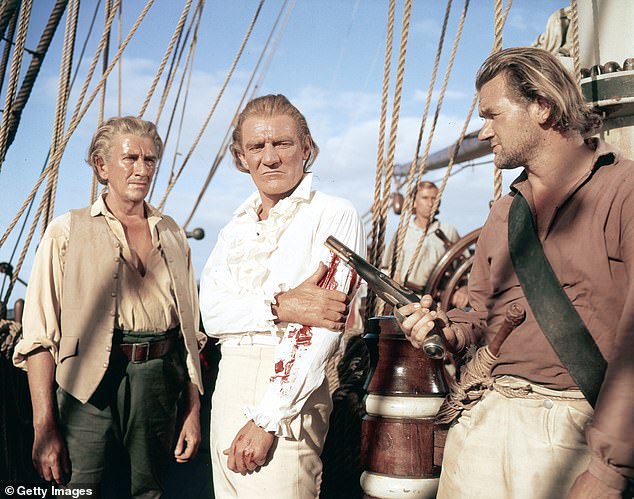
He started his acting journey in theater with the Old Vic Company directed by John Gielgud. In film, he appeared in "The Cockleshell Heroes" (1955) and "The Bridge on the River Kwai" (1957). This latter movie was inspired by the POW camp where he had served time.
Herbert served as a consultant for the film. Additionally, he appeared in several other war movies like Tobruk (1967). His acting range was impressive, with roles spanning various genres including fantasy films such as One Million Years B.C., historical dramas like Mutiny On The Bounty, and comedies where he starred in two Carry On films.
He made appearances on television in "Worzel Gummidge," "General Hospital," and "Dixon of Dock Green." In 1947, he married Amy Lindsay, with whom he had two children. He passed away due to a heart attack at the age of 72.
Clive Gill, Wimborne, Dorset
QUESTION: Why is a hoax also considered a canard?
The term 'canard,' which refers to an untrue, disparaging, or baseless rumor in English, originates from the French word with the same spelling but denotes a duck. This usage is consistent in both languages.
The 19th-century Frenchlexicographer Emile Littre traced the usage to an old expression, ‘vendre un canard a moitie’, meaning ‘to half-sell a duck’ (i.e. to not sell it at all).
In "A Dictionarie of the French and English Tongues" published in 1611 by Randle Cotgrave, he interprets the French phrase 'vendeur de canards à moitié' as 'a swindler, deceiver, cheat; fraudster, liar'.
S. E. Smith from Leamington Spa, Warwickshire
What are some of the strangest and most unusual marathon competitions around the globe?
Following the previous response, perhaps one of the most peculiar races has to be the Self-Transcendence 3100 Mile Race. Runners circle a solitary block in New York City repeatedly over a period lasting as long as 52 days to finish this event.
Diane Higgs, Street, Somerset
Read more